

Things to Know About Electrostatic Discharge Testing
EMC has many testing projects. Among them, the ESD simulation test has a significant peculiarity. That is, apart from the fixed test bench, all other test procedures are completed by manual operation. Therefore, it can be said that in the ESD simulation test, human error operation is an unignorable factor that affects the test results and needs to be given attention.
This article will provide a brief introduction to some basic knowledge of ESD simulation testing, based on the reference standards.
1Selection of parameters for the discharge head of the electrostatic generator (discharge resistance and energy storage capacitor)
1. IEC 61000-4-2 / GBT 17626.2 is a universal standard used for ESD simulation testing of electronic and electrical equipment, and it meets the requirements of most product testing scenarios. Some products have their own specific product standards, which are also based on this standard.
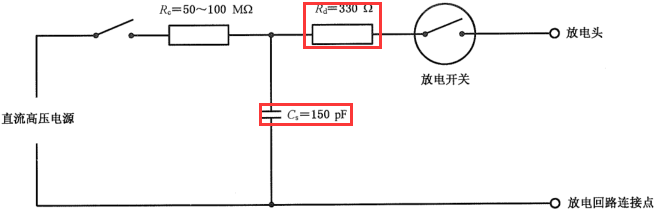
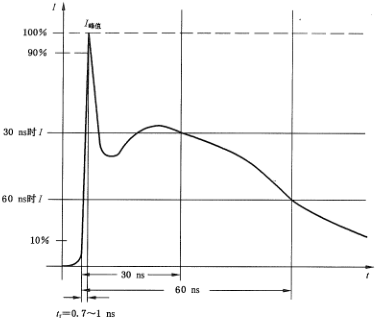
The selected component parameters are 150PF and 330Ω. These capacitor parameters represent the nominal values of energy storage capacitors for human body capacitance; the resistance parameters represent the source resistance when a person holds a metal object such as a key or a metal tool. It has been proven that this metal discharge situation is sufficient to strictly represent the discharges of various personnel at the scene. Unless otherwise specified, this parameter shall be followed.
2. ISO10605/GBT19951 Test Method for Electromagnetic Interference Generated by Static Discharge in Road Vehicles. Different capacitance, voltage and resistance values represent the different characteristics of the static charge source in the vehicle environment. Two discharge terminals with capacitance of 330PF and 150PF and a resistance of 2000Ω are required.
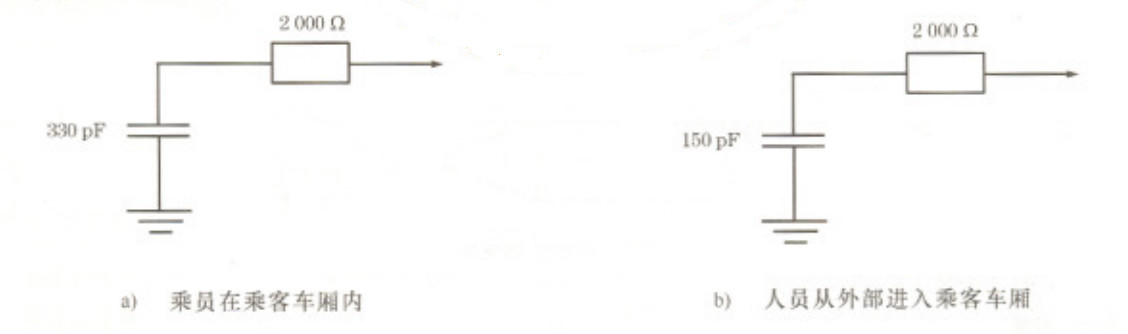
For the entire vehicle, both Figure a and Figure b will be used during the vehicle experiment. Specifically, the 330PF and 2000Ω combination is used to test all the discharge points that can be reached inside the vehicle. The 150PF and 2000Ω combination is used to test the discharge points that can be easily reached when standing outside the vehicle or entering it. When conducting tests on automotive electronic modules such as navigation systems, the 150PF and 2000Ω discharge terminals are used.
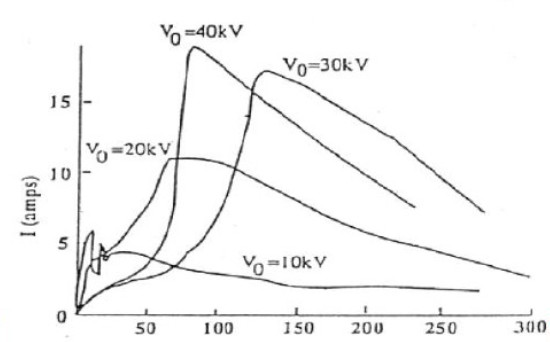
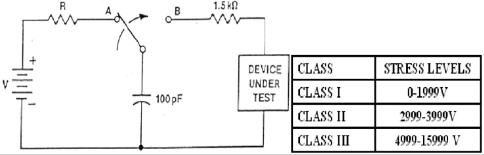
3. Human body discharge mode (EIA/JESD22-A114-A) is a simulation of the situation where static electricity has accumulated on the human body due to walking on the ground or other factors. When the human body touches the IC, the static electricity on the body will enter the IC through the IC's pins and then discharge to the ground. Different HBM static voltages will result in different instantaneous discharge current-time relationships.
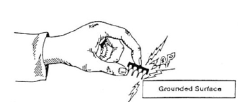
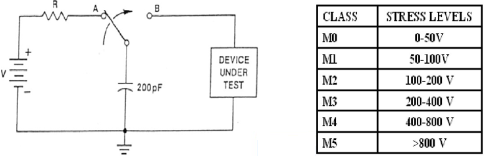
4. Machine discharge mode (EIAJ-IC-121 method 20), the machine that simulates the metal has accumulated static electricity. When the machine touches the IC, the static electricity enters the IC and discharges through the IC pins to the ground. Since the machine is made of metal, the equivalent resistance is 0Ω, and the discharge process is very fast, with a current much larger than that of HBM in an instant.
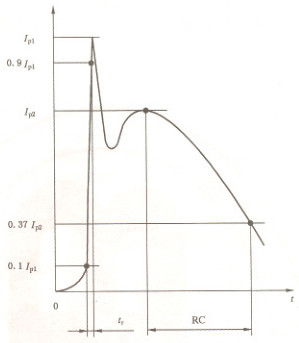
From the above, it can be seen that the application scope of points 3 and 4 is electronic components. It can be observed that different discharge terminal parameters have an impact on the test results. The RC time constant has changed. For example, the RC time constant of the discharge terminal with 300PF and 2000Ω is 600ns ± 130ns. In fact, this can be more destructive to the protective devices.
2Selection of locations for contact discharge and air discharge
Unless otherwise specified in the product standards, electrostatic discharge is only applied to the points and surfaces of the test equipment that can be accessed during normal use. Contact discharge is applied to the accessible discharge points (generally the conductive body, which can be measured using the diode setting of a multimeter), and air discharge is applied to the inaccessible discharge points (such as insulating gaps).
The following situations will not be tested:
The specific points and surfaces that can only be accessed during maintenance and servicing.
2. Points and surfaces that are no longer accessible after the equipment has been installed and fixed, or after it has been used in accordance with the instructions.
3. Due to functional requirements, areas that are sensitive to electrostatic discharge and have electrostatic warning labels.
4. For coaxial connectors and multi-core connectors with metal housings, the contact points (signal pins) are exposed. In this case, only metal-to-metal discharge occurs; if the housing is made of non-conductive material, only air discharge takes place.
Regarding the outer shell mentioned in point 4 above, consider the following 6 scenarios:
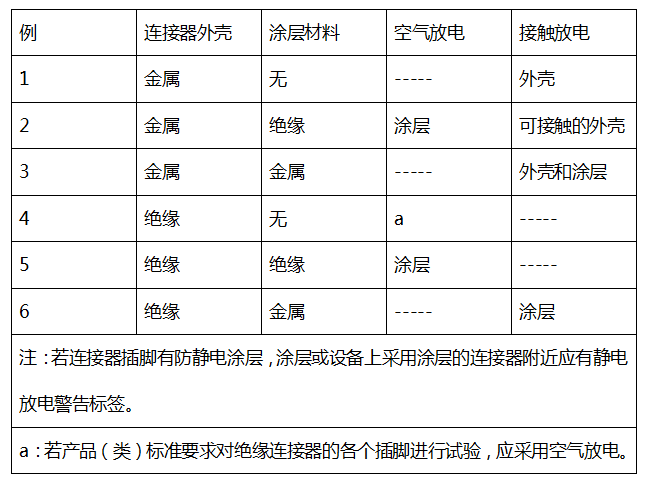
3Test Precautions
The discharge head should be perpendicular to the surface of the test location to ensure repeatability.
2. For contact discharge, it is essential to ensure that the discharge tip makes a good contact with the conductor surface without any gaps. Otherwise, arc discharge will occur, seriously affecting the test results.
3. During air discharge, the discharge end needs to be at least 15mm away from the tested equipment. Close the switch, then approach the test point until discharge occurs. Never place the circular discharge head directly on the test point. After discharge, remove the discharge head. A single discharge must be formed as the waveform of a single discharge conforms to the standard waveform (some electrostatic guns will keep discharging as long as the switch is pressed). Slowly approaching can also reduce multiple discharges, low potential discharges, and avoid interference from strong electric fields affecting the test results.
4. When testing a product, one should first identify the location where contact or air discharge will occur. Conduct a polarity test first, and then perform another polarity test after completion.
5. Air discharge test: For some insulation points, no electricity can be discharged. In such cases, the test does not need to be conducted at the current test level. Unless there are higher test requirements, the previous steps will be repeated.
6. In cases where the surface of the discharge point is coated with paint, the following operation procedures should be followed:
If the equipment manufacturer does not specify that the coating is an insulating layer, then the paint should be scraped off so that the discharge head can come into contact with the conductive layer. If it is indicated that the coating is an insulating layer, only air discharge should be performed and no contact discharge should be conducted.
4Judgment of the test results
1. General standard
CLASS A) The performance is normal within the limits specified by the manufacturer, the client, or the purchaser.
(B) The function or performance is temporarily lost or reduced, but it can recover on its own after the harassment stops, without requiring any intervention from the operator.
CLASS C) The function or performance is temporarily lost or reduced, but it can only be restored with the intervention of the operator.
CLASS D) Due to damage to the equipment hardware or software, or loss of data, resulting in the loss of recoverable functions or reduced performance.
2. Road Vehicles
Class A: During and after the period when the equipment or system is exposed to interference, it is capable of performing all the functions as originally designed.
Class B: During the period when the equipment or system is exposed to interference, it is capable of performing all of its designed functions. However, one or more of these functions deviate slightly. Once the interference is removed, the system automatically recovers.
Class C: During the period when the equipment or system is exposed to interference, it is unable to perform one or more of the designed functions, but it can recover on its own after the interference is removed.
Class D: During the period when the equipment or system is exposed to interference, it is unable to perform one or more of the designed functions. After removing the interference and through simple operations or reset, it can recover on its own.
Class E: During and after exposure to interference, the equipment or system is unable to perform one or more of its designed functions, and cannot be restored without repair or replacement.
Related News







 Follow Us
 +86-755-82984733
 sales@ecmg-global.net