

Static electricity elimination in semiconductor production
Throughout the entire semiconductor manufacturing process, particle contamination; electrostatic discharge damage, and the associated equipment downtime are the three major problems caused by static electricity. Therefore, static control must be implemented. The International Semiconductor Development Roadmap and SEMI standards have proposed suggestions for controlling static electricity at an appropriate level. The static control scheme includes grounding, static dissipation materials, and air ionization. To meet the requirements brought about by the rapid development of semiconductor production, static dissipation materials and air ionizers are also constantly changing.
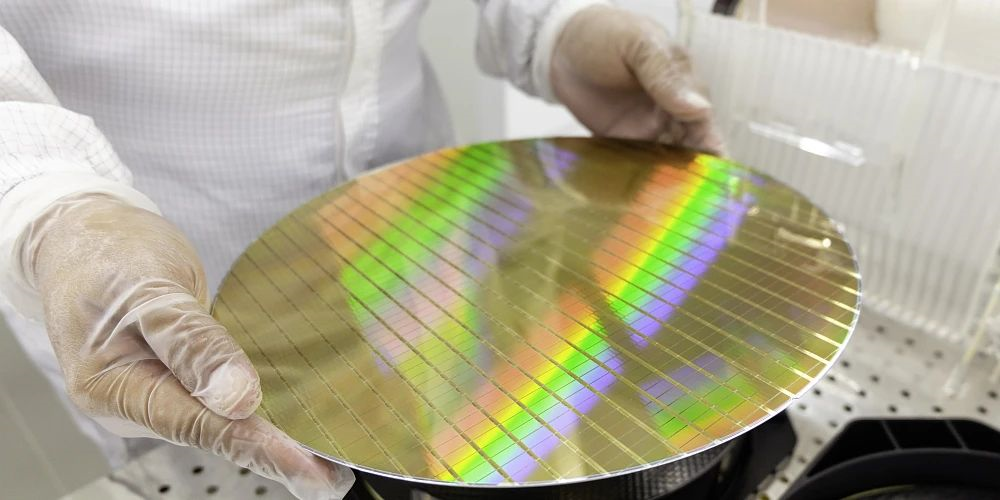
Semiconductor | Wafer Manufacturing
In all semiconductor production fields, the negative effects of static electricity make it more difficult to maintain high levels of product quality and yield. The absence of static control will lead to particle contamination, static discharge damage and equipment failures. These will occur in the manufacturing of silicon wafers, the manufacturing of photomasks, or in the semiconductor front-end clean rooms where devices are manufactured, as well as in the back-end processes including assembly, packaging, final testing and shipping.
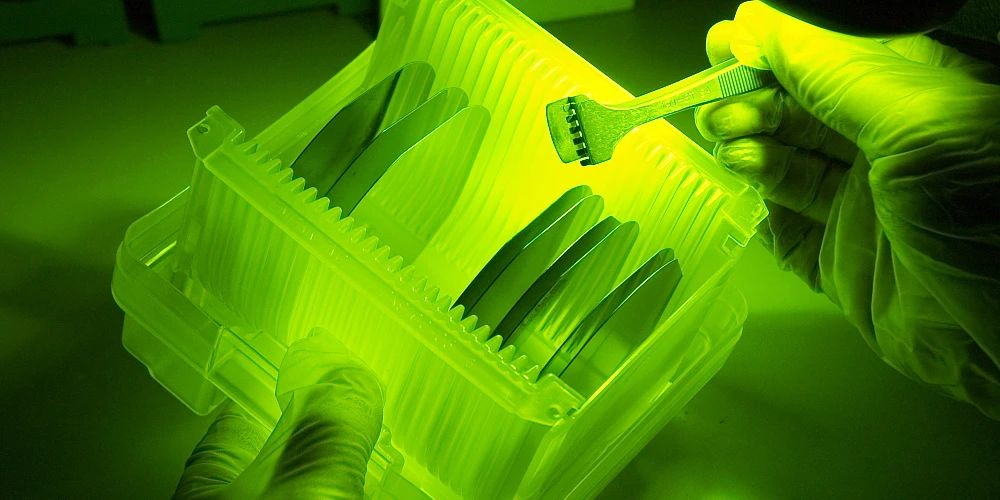
Semiconductor | Wafer Manufacturing | Wafer Transport Box
Electrostatic discharge is a rapid process of electric charge transfer that occurs between two objects with different electrical potentials. When it happens during semiconductor manufacturing, the main result is the damage to the photomask and the product. The photomask is like a "negative film" and is used to print graphics on semiconductor chips. In semiconductor manufacturing processes, the damaged photomask takes a considerable amount of time to be discovered. During this time, thousands of defective products with damaged photomasks are replicated. Electronic device damage caused by electrostatic discharge mainly occurs during packaging, assembly, and testing operations. When the packaging leads touch the ground point, the electric charge on the insulated device package forms electrostatic discharge. Similarly, with high-speed automated operation processes, thousands of devices have already been damaged before the damage is discovered. As the characteristics size of the devices shrinks, the ability of devices and photomasks to resist electrostatic discharge is also decreasing.
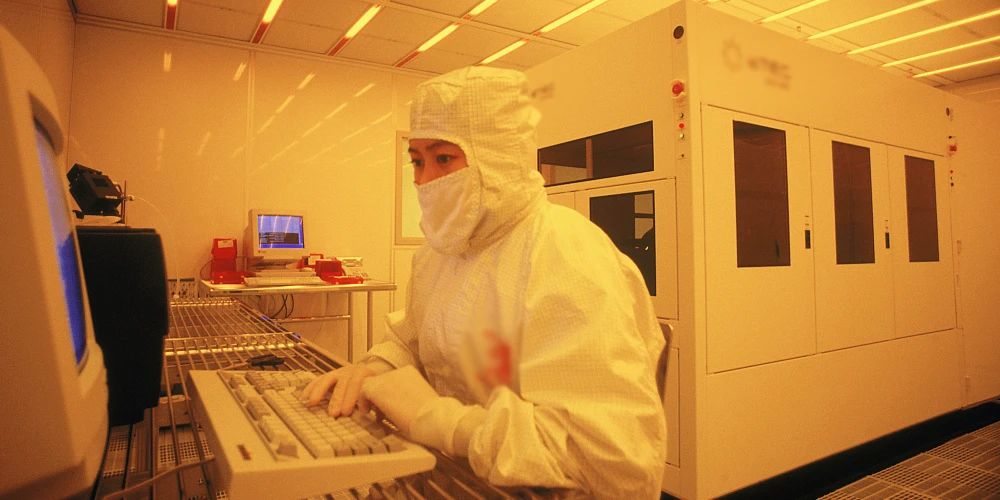
This roadmap also includes suggestions for reducing the static electricity level to prevent static issues. These suggestions should be implemented in both new factories and existing ones. As the technology updates and smaller processes are introduced, the static electricity level must be lowered. For every semiconductor factory, the key is to introduce an electrostatic control scheme. The cost of static issues is 10 to 100 times that of the cost of the electrostatic control methods.
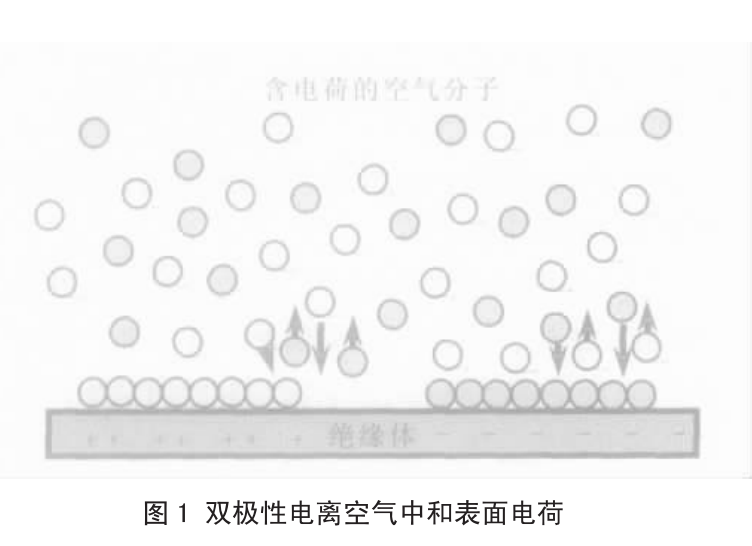
When ionized air encounters the charged surface of an insulator, the charged surface will attract the opposite-polarity ions in the ionized air, resulting in neutralization. Since both polarities of static electricity are generated during the production process, two polarities of air ionization are required.
Electric field - Any electric field generated by charged surfaces in the production environment can lead to two potential problems: the adsorption of contaminating particles and the induction of electrostatic discharge, which will damage the photomask and the product. These two problems will change linearly with the feature size.
The three factors that directly affect the electrostatic adsorption of particles are the concentration of particles in the air, the exposure time of particles in the air, and the presence of any electric field. The first two variables are determined by the construction, operation and production process of the factory. Any degree of electric field will lead to the electrostatic adsorption of particles. In industry, it is recommended to limit this adsorption to be no greater than the adsorption of other types of particles such as gravity and diffusion.
The electric field can also cause damage to the photomask and the device. The electric field causes the separation of charges in the metal on the photomask. If the potential difference between isolated metals on the photomask is large enough, electrostatic discharge will occur. The electric field may be caused by the charges on the quartz substrate of the photomask, or by the charges on other objects in the environment where the photomask is used.
Pollution - Most semiconductor production takes place in dust-free rooms, and the particles generated by ion generators will be a matter of concern. Any fatal particle that causes defects has two characteristics: chemical composition and size. In the production of silicon semiconductors, using silicon needle tips in ion generators is normal, while any other material needle tips would be a source of chemical pollution. As feature sizes shrink, the size of fatal particles also decreases. For 90-nanometer devices, the typical size of fatal particles is 30 nanometers, while for 25-nanometer devices, the size of fatal particles will be only 8 nanometers.
Conclusion
As the semiconductor industry evolves according to the predicted technological advancements, electrostatic control will become even more crucial. It is certain that a technological limit will make electrostatic control indispensable. We have already witnessed a technological limit in the hard disk drive industry. Without a comprehensive electrostatic control solution, magnetic resistance (MR) heads simply cannot be manufactured.
Since in semiconductor manufacturing, insulators are indispensable in the process, and even the products themselves are insulators. Therefore, air ionization becomes an important part of electrostatic control. The development of semiconductor manufacturing technology requires that the electrostatic dissipation materials and ion generators in the electrostatic control scheme should be improved in terms of performance.
It should be remembered that the cost of implementing all the methods recommended in the American National Standards Institute's electrostatic discharge standard S20.20 is usually much lower than the losses caused by electrostatic issues, including the cost of solving the problems. Electrostatic control is definitely a necessary option!
Source: "China Integrated Circuits": 2005.2
Related News







 Follow Us
 +86-755-82984733
 sales@ecmg-global.net