

Is it harmful for the neutral wire to be electrified? The causes of the neutral wire being electrified and the corresponding handling methods.
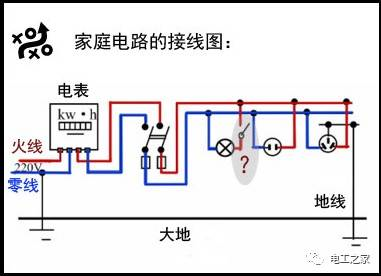
The presence of live neutral wires poses the following hazards:
(1) When the neutral line is disconnected, due to the asymmetry of the load, the neutral point will drift. The voltage of the light-load phase will rise. If it exceeds the rated voltage of the electrical equipment, it will shorten the equipment's lifespan. If the deviation is too large, it may even damage the equipment and cause "cluster explosions" of household appliances and lighting fixtures.
(2) When the zero-phase line breaks, the voltage of the heavy-load phase drops, the three-phase voltages become unbalanced, the electrical equipment cannot reach its normal output, the starting current of the motor increases, making it difficult to start, the motor overheats, the incandescent lamp becomes dim, and the fluorescent lamp fails to start.
(3) When the neutral wire breaks, since the equipment cannot function properly, it is prone to misjudging the equipment as being uncharged and thus causing an electric shock accident.
When a phase-to-ground fault occurs, the voltage of the neutral line rises. For equipment that adopts protective grounding, its casing will also carry dangerous voltage. Additionally, since the transformer casing is connected to the neutral point of the transformer and then grounded, people may suffer electric shock accidents if they accidentally touch the equipment, the transformer casing, or the grounding lead-down line. At the same time, step voltage shock and contact shock may occur near the fault point or the working point of the transformer.
(4) Distribution transformers are prone to being damaged by lightning strikes. The lightning arresters of distribution transformers generally adopt a "three-in-one" grounding method, that is, the grounding lead-down line of the lightning arrester, the metal casing of the distribution transformer, and the neutral point on the low-voltage side are connected together, and then all are connected to the grounding device.
Under normal circumstances, the neutral line is at the same potential as the earth and is generally not electrified. Therefore, zero-line electric shock accidents should not occur. However, in the following situations, the neutral line may become electrified and zero-line electric shock accidents may occur:
(1) The three-phase load is severely unbalanced. Due to the severe imbalance of the load, a considerable current flows through the neutral line (which refers to the neutral wire, i.e., the zero busbar). The neutral line has a certain impedance, so there is a voltage drop on the neutral line. Although there is no voltage on the working grounding line of the transformer neutral point, the neutral line is electrified. The voltage on the neutral line is higher the closer it is to the load side, and the greater the impedance of the neutral line, the higher the voltage.
(2) Zero line break or poor connection. When the zero line is disconnected or has poor connection, if the load is severely unbalanced, it will cause the neutral point on the load side to experience potential drift, resulting in dangerous voltage on the zero line.
Apart from the asymmetry of the load causing the zero line potential to rise, the asymmetry of the three-phase power supply is also an important factor. For instance, if the three-phase power switch contacts are not properly connected, or only two phases or a single phase of the power supply are provided; or if the fuse of a certain phase on the high-voltage side or low-voltage side of the transformer blows, etc., it may cause dangerous voltages on the zero line.
(3) Poor grounding of the neutral line. Poor grounding of the neutral line (i.e., grounding of the transformer neutral point) or a broken grounding wire can significantly increase the potential of the neutral line under certain conditions. For instance, if the grounding wire of the neutral line breaks while another phase has a grounding fault, the voltage between the neutral line and the ground will rise to the phase voltage (220V) or even higher. At this point, it would be dangerous for a person standing on the ground to touch the neutral line.
(4) Capacitive transmission. In some cases, even if the low-voltage circuit has disconnected from the power supply, since the neutral wire and the transformer are generally not disconnected, the high-voltage power supply may be transmitted to the neutral wire through the capacitance between the high and low-voltage windings of the transformer. If the neutral wire is poorly grounded or the grounding wire is broken, thousands of volts of high voltage may appear on the neutral wire.
(5) Phase line grounding. When the insulation of equipment or lines is damaged, a phase line grounding short circuit fault will occur.
Related News







 Follow Us
 +86-755-82984733
 sales@ecmg-global.net