

What is DEHP - Where can I do the chemical test for it?
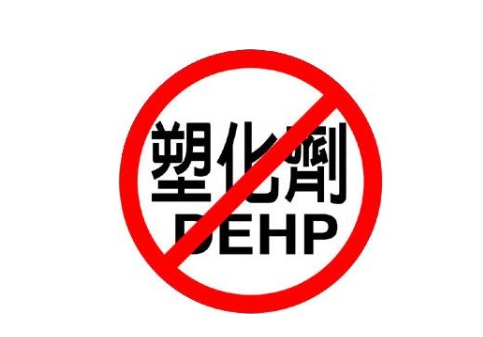
1. What is DEHP?
The plasticizer DEHP refers to "di-(2-ethylhexyl) phthalate", which is a toxic chemical plastic softener. It is a colorless and odorless liquid. When added, it can make the molecular particles more evenly distributed, thus increasing the extensibility, elasticity and softness. It is often used as a raw material for sofas, car seats, rubber tubes, cosmetics and toys, and belongs to industrial additives.
It is also a widely used plasticizer. When this substance is added during plastic processing, it can enhance the flexibility of the plastic and make it easier to process. The toxic emulsifier made by replacing palm oil with DEHP can also achieve a thickening effect similar to that of emulsifiers. However, industry insiders point out that DEHP, as a plasticizer, does not belong to food flavoring raw materials. Therefore, DEHP cannot be added to food and is even not allowed to be used on food packaging. A survey shows that in the emulsifier formulas of many beverages and foods in Taiwan over the past 30 years, plasticizers have been added. This may be the direct cause of the low birth rate and increased infertility in Taiwan.
II. What is the foam booster?
"Emulsifier" is a legal food additive that is commonly used in foods such as juices, jams, and beverages. It is made by mixing arabic gum, emulsifiers, palm oil, and various food additives. However, due to the high cost of palm oil, which is five times the price of plasticizers, Yuxin Flavor Company replaced the plasticizers with cheaper but toxic ones and added them to the "emulsifier".
III. The Current Situation of Plasticizer Usage in China
Plasticizers are one of the most widely produced and consumed plastic additives in the world. In recent years, China has become the country with the highest production and consumption of plasticizers in Asia. With the increasing environmental awareness worldwide, plastic products such as those for medicine and food packaging, daily necessities, and toys have demanded higher purity and hygiene standards for main plasticizers like DOP.
However, the main plasticizers produced by domestic enterprises currently fail to meet the environmental protection requirements in many aspects, especially in terms of hygiene and low toxicity. The European Union and Russia have successively found that some plastic toys imported from China contain toxic polyvinyl chloride plasticizers, namely N-isononyl phthalate (DINP) and diethylhexyl phthalate (DEHP, or DOP), which are originally from China.
For a long time, plasticizers have mainly been of the phthalate type. However, as DOP has been increasingly used in the food and pharmaceutical industries, people have become more concerned about its toxicity. Some researchers have discovered that when blood stored in polyvinyl chloride plastic bags is injected into the human body, especially in the lungs, DOP products are found to exist within the body.
In 1982, the authoritative National Cancer Institute of the United States conducted a biological assessment of the carcinogenicity of DOP. The conclusion was that DOP is a carcinogen for rats and mice, and it can cause cancer in the livers of rodents. Thus, the toxicity of DOP attracted worldwide attention. Although the claim of whether it can cause cancer in humans is still under debate, due to its potential carcinogenic suspicion, various countries have taken corresponding measures. The Environmental Protection Agency of the United States, based on the research results of the National Cancer Institute, has halted the production of six new industrial products of phthalates, and DOP is only allowed to be used in food packaging with high water content, while meat packaging must use other non-toxic plasticizers as substitutes; the Swiss government has decided to ban the use of DOP in children's toys; Germany has prohibited the addition of DOP in all plastic products related to human health and food; Japan has prohibited the addition of DOP in medical device-related products, and it is only allowed to be used in industrial plastic products.
IV. Relevant National Standards
According to the research results and standards issued by countries such as Europe, the United States, Japan, and South Korea, DOP (DEHP) is more harmful than DOA (DEHA). For instance, the European Food Safety Authority (EFSA) stipulates that a DEHA concentration of 0.3 milligrams per kilogram or higher in the human body is considered unsafe, while a DEHP concentration of 0.05 milligrams per kilogram or higher is deemed unsafe. Currently, both DOA and DOP are widely used as plasticizers in domestic polyvinyl chloride (PVC) food保鲜膜. DOP is the most commonly used plasticizer, and it is extensively used in food packaging products. Among the 10 main plasticizers allowed in PVC food保鲜膜 in China, the first one is adipic acid dioctanoic acid (i.e., DEHA, abbreviated as DOA), and the following three are phthalic acid esters DBP, DOP, and DIOP. Their toxicity is relatively greater than that of DEHA. Due to the higher production cost of DOA, most domestic PVC保鲜膜 manufacturers use DOP and DBP as the main plasticizers. This results in a higher chance of plasticizer migration into the packaged food when the保鲜膜 is used on meat products with high fat content or when it wraps food and is heated in a microwave oven. This may pose potential hazards to human health. However, when used on vegetables, especially those that need to be washed before consumption or before making food, it is relatively safer.
The plasticizer DEHP refers to "di-(2-ethylhexyl) phthalate", which is a toxic chemical plastic softener used in the industry. It is a colorless and odorless liquid. When added, it can make the molecular particles more evenly distributed, thereby increasing the extensibility, elasticity and softness. It is often used as a raw material for sofas, car seats, rubber tubes, cosmetics and toys, and belongs to industrial additives.
V. Basic Introduction
Phthalates are also a widely used type of plasticizer. When added to plastic processing, this substance can enhance the flexibility of the plastic and make it easier to process. The toxic emulsifier prepared by replacing palm oil with DEHP can also achieve a thickening effect similar to that of emulsifiers. However, industry experts point out that DEHP, as a plasticizer, does not belong to food flavoring raw materials. Therefore, DEHP cannot be added to food and is even prohibited from being used on food packaging.
Related News






 Follow Us
 +86-755-82984733
 sales@ecmg-global.net