

3-meter anechoic chamber test site
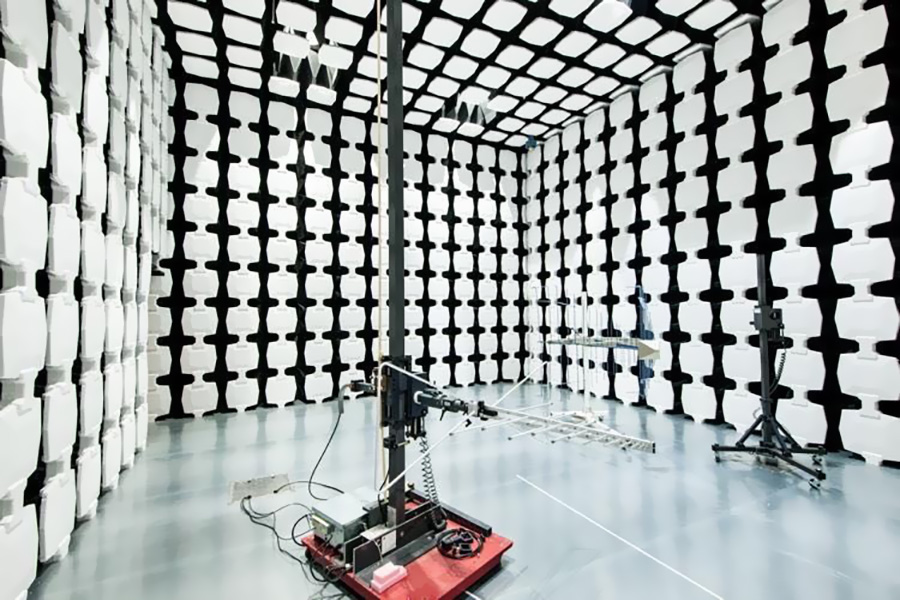
The 3‑meter anechoic chamber test site is a specialized laboratory for electromagnetic compatibility (EMC) testing, designed according to a 3‑meter test distance. A detailed introduction is provided below:
Structure Composition
Main Anechoic Chamber:This is the primary area for EMC testing. Absorbing materials are typically installed on the internal walls and ceiling. The floor can be equipped with absorbing materials or a metallic reflective surface as needed, to simulate the electromagnetic environment of an open area.
Operation Control RoomIt is used to house test instruments and control equipment. Operators monitor and carry out tests in the main anechoic chamber from this room, which is connected to the main chamber via a signal transmission system.
Power Amplifier RoomIt can be equipped with a conducted test room, used to accommodate power amplifiers and other equipment, providing the required signal power for radiated immunity tests.
Main Performance Specifications
- Shielding Effectiveness: Meets EN 50147-1 or higher standards, effectively isolating external electromagnetic interference and ensuring a clean test environment inside the chamber.
- Normalized Site Attenuation (NSA): Within 30 MHz–1 GHz, complies with CISPR 16-1-4 and ANSI C63.4, with selectable tolerances of ±3.5 dB, ±3.0 dB, and ±2.5 dB. It is used to evaluate how well the chamber simulates an open-area test site.
- Field Uniformity (FU): Tested in accordance with IEC 61000-4-3, within 0–6 dB, ensuring uniform electromagnetic field distribution in the test area of the chamber.
- Site Voltage Standing Wave Ratio (sVSWR): Within 1 GHz–18 GHz, no more than 6 dB per CISPR 16-1-4, reflecting electromagnetic wave reflection inside the chamber.
- Ambient Background Noise (ABN): 10 dB below the limits specified in CISPR 22. Low background noise contributes to accurate measurement of electromagnetic signals from the equipment under test.
Related Cases
-
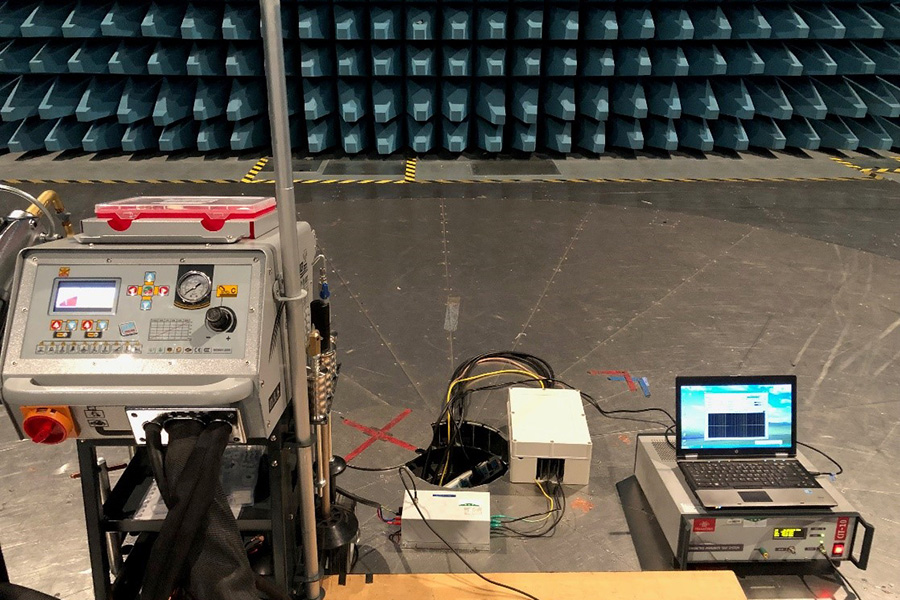
Resistance Welding - Conducted Immunity Test
The conducted immunity test for resistance welding equipment is a core electromagnetic compatibility (EMC) test. It verifies the ability of resistance welding equipment (including spot welding, seam welding, projection welding, etc.) to resist radio frequency interference signals...View Details + -
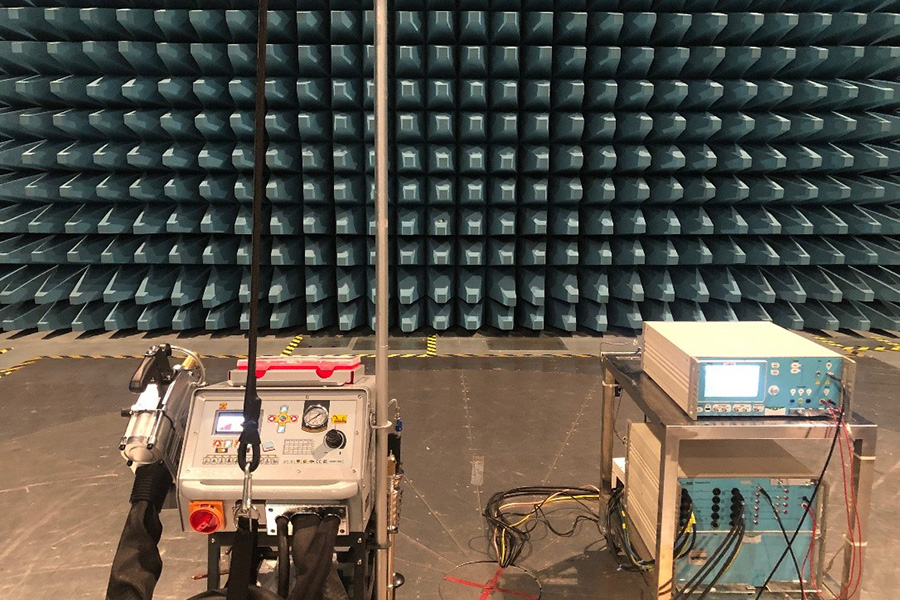
Resistance Welding - Electrical Fast Transient Burst and Surge Test
The Electrical Fast Transient/Burst (EFT/B) test and Surge (Impulse) test for resistance welding equipment are core items of the electromagnetic compatibility (EMC) immunity test for industrial-grade welding equipment.They mainly simulate two typical transient disturbances in ind...View Details + -
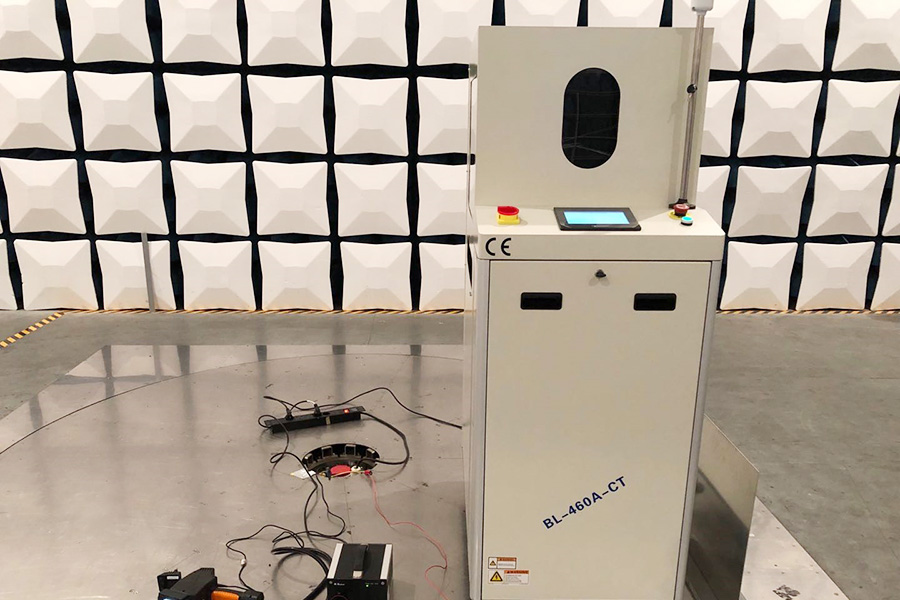
ESD Test
ESD test refers to the Electrostatic Discharge test, a core part of electromagnetic compatibility (EMC) testing. It is used to evaluate the immunity and operational stability of electronic and electrical equipment when subjected to electrostatic discharge interference, so as to e...View Details +

 Follow Us
 +86-755-82984733
 sales@ecmg-global.net