

What is an electromagnetic shielding room? What is a microwave anechoic chamber? What is an electromagnetic shielding box? What is an electromagnetic shielding cabinet?
What is an electromagnetic shielding room?
The electromagnetic shielding room is an important aspect in the field of electromagnetic compatibility (EMC). An electromagnetic shielding room is essentially a steel-structured building, with cold-rolled steel serving as its main shielding material. It includes the six-sided shell, doors, windows and other common elements of a house, but with the requirement of strict electromagnetic sealing performance. All incoming and outgoing pipelines must also be shielded accordingly to prevent electromagnetic radiation from entering or exiting.
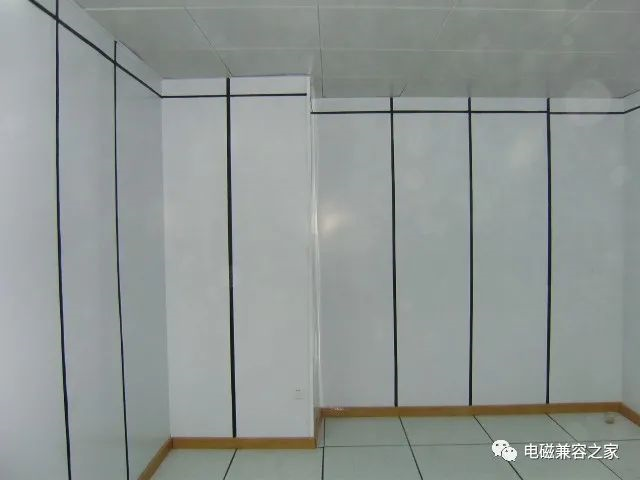
The electromagnetic shielding rooms are divided into four types: steel plate assembly type, steel plate welding type, steel plate direct attachment type and copper mesh type. The assembly type is made by assembling steel plate modules with a thickness of 1.5 mm. The production and installation processes are relatively simple, and it is suitable for small areas and projects with general shielding performance requirements. It can be disassembled and relocated, but the shielding performance will significantly decrease after relocation. The welding type shielding room is made by welding 2-3 mm cold-rolled steel plates with a keel frame. It has high shielding performance, is suitable for various specifications and sizes, and is the main form of electromagnetic shielding rooms. The direct attachment type and copper mesh type are used for simple projects with lower shielding performance requirements.
Main functions:
Isolate from external electromagnetic interference to ensure the normal operation of indoor electronic and electrical equipment. Especially in the measurement and testing of electronic components and electrical equipment, using an electromagnetic shielding room (or dark room) to simulate an ideal electromagnetic environment can improve the accuracy of the test results.
Block the indoor electromagnetic radiation from spreading to the outside. Strong electromagnetic radiation sources should be shielded and isolated to prevent interference with the normal operation of other electronic and electrical equipment and even damage to the health of the staff.
To prevent the leakage of information from electronic communication devices and ensure information security. Electronic communication signals will spread to the outside world in the form of electromagnetic radiation (i.e., the TEMPEST phenomenon), and the enemy can intercept and restore them by using monitoring equipment. The electromagnetic shielding room is an effective measure to ensure information security.
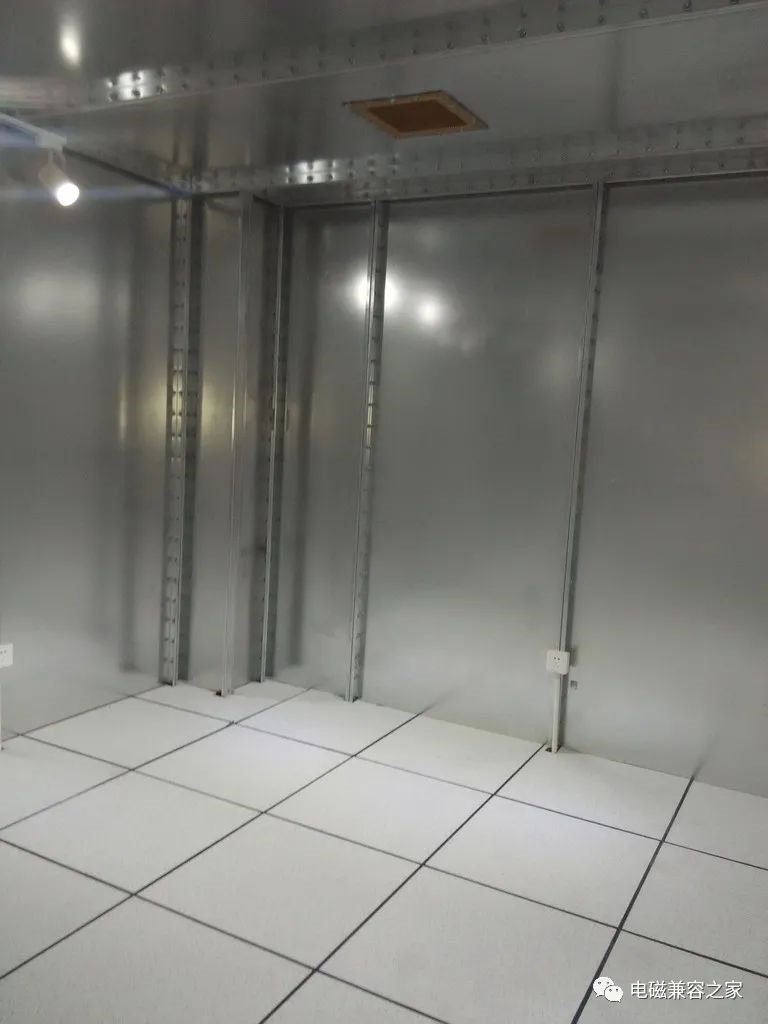
The elements of military command communication must have the ability to resist enemy electromagnetic interference. In the event of an electromagnetic interference attack or even an extreme situation such as a nuclear explosion, in combination with other protective elements, they should protect the electronic communication equipment from damage and ensure its normal operation. The electromagnetic pulse protection room is a special product developed based on the electromagnetic shielding room and in accordance with the special requirements for electromagnetic pulse protection in the military field.
What is a microwave anechoic chamber?
Microwave anechoic chamber, absorbing chamber, radio wave anechoic chamber. When electromagnetic waves are incident on the walls, ceilings and floors, most of the electromagnetic waves are absorbed, while transmission and reflection are very little. Microwaves also have some characteristics of light. By using the meaning of the optical anechoic chamber, it is named the microwave anechoic chamber. The microwave anechoic chamber is a special room composed of SA equipment and metal shielding bodies. It provides people with the condition of an empty "free space". Conducting tests on wireless communication products and electronic products such as antennas and radars in the anechoic chamber can avoid interference from noise, improving the testing accuracy and efficiency of the tested equipment. With the continuous development of electronic technology, the microwave anechoic chamber has been understood and applied by more people.
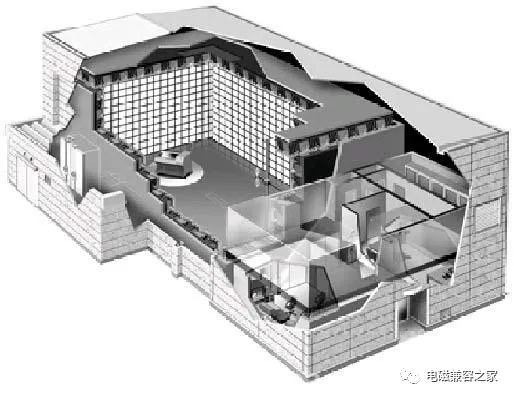
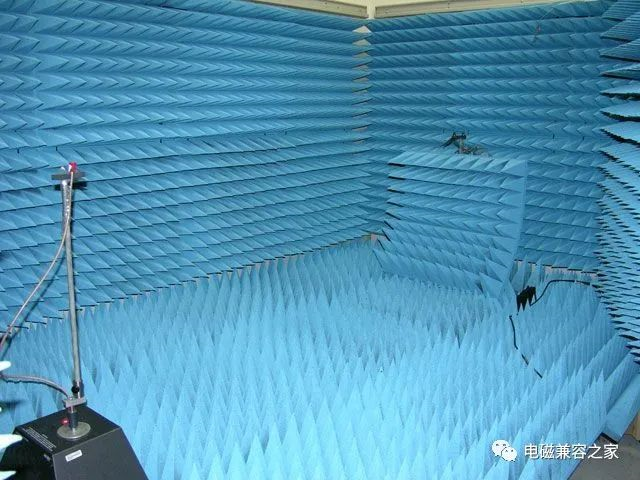
A microwave anechoic chamber is a closed space created using absorbing materials. This enables a pure electromagnetic environment to be created within the chamber. The materials used for microwave anechoic chambers can be any absorbing materials. The main material is polyurethane absorbing sponge SA (used for high-frequency applications). Additionally, when testing the electromagnetic compatibility of electronic products, if the frequency is too low, ferrite absorbing materials are also used.
The main working principle of the microwave anechoic chamber is based on the law that electromagnetic waves propagate from a low magnetic permeability direction to a high magnetic permeability direction in a medium. It uses high magnetic permeability absorbing materials to guide the electromagnetic waves. Through resonance, it absorbs a large amount of the radiation energy of the electromagnetic waves and then converts the energy of the electromagnetic waves into heat energy through coupling.
Scope of Application and Main Performance:
The microwave anechoic chamber is mainly used for measuring radio electromagnetic interference (EMI) and radiation sensitivity (EMS). The size of the microwave anechoic chamber and the selection of radio frequency absorbing materials are mainly determined by the shape size of the tested equipment (EUT) and the test requirements. Frequency range: 30 MHz to 18 GHz. Absorptive material reflection loss: 30 MHz to 18 GHz ≥ 15 dB (The absorbing material is a composite absorbing material, that is, the conical carbon-containing sponge absorbing material is pasted on the ferrite)
What is an electromagnetic shielding box?
The electromagnetic shielding box is a metal body made of conductive or magnetic materials in various shapes such as shells, plates, and sleeves. It limits the electromagnetic capacity within a certain space range to suppress radiation interference. It processes both conduction and radiation to provide a non-interfering testing environment for the tested wireless communication equipment.
Main applications:
Electromagnetic interference (EMI) is a problem that the entire electronic field must currently confront and overcome. Generally, in wireless communication products such as: wireless headphones, wireless routers, wireless network cards, mobile phones, Wi-Fi, Bluetooth headphones, data cards, WiMAX, walkie-talkies, RFID, etc., in the board testing and final testing processes of wireless communication devices and modules like these, a radio frequency test shielding box/RF Shield Box is used to improve the testing environment (application of the shielding box). Its main function is to reduce the impact of electromagnetic fields on operators, save handling time, isolate external base station signals, isolate interference from adjacent test stations, integrate multiple testing processes, and simplify the process (function of the shielding box).
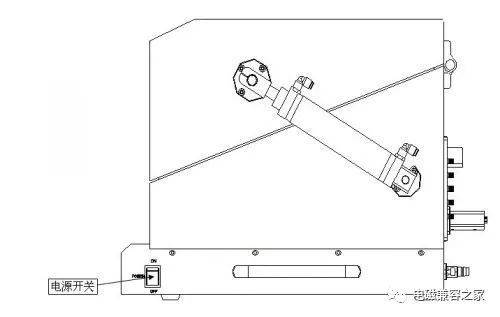
The purpose of using shielding is twofold: Firstly, to prevent external radiated electromagnetic energy from entering a certain area; secondly, to limit the radiated electromagnetic energy within the equipment from exceeding a certain area. And depending on the different testing methods, shielding boxes are classified as semi-automatic shielding boxes, pneumatic shielding boxes, and manual shielding boxes.
What is an electromagnetic shielding cabinet?
As people's awareness of the hazards of electromagnetic leakage emissions from classified information systems gradually deepens, various measures to prevent electromagnetic leakage emissions have been widely adopted in the construction of classified information networks, including building electromagnetic shielding rooms, laying optical cables and shielded twisted-pair cables, using low-radiation equipment, red-black power isolation sockets, and shielding cabinets. Among these, the shielding cabinet has the characteristics of small size, convenient installation, and flexible use, and is particularly suitable for use in those situations where it is not appropriate to install an electromagnetic shielding room but protection for information equipment is still required.
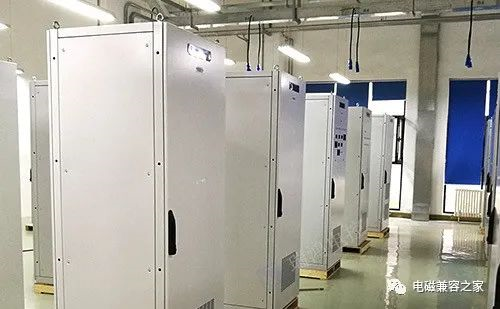
The electromagnetic shielding cabinet is a standard electromagnetic protection device. This cabinet comprehensively employs technologies such as shielding, isolation, and grounding to suppress electromagnetic leakage. It can effectively prevent the electromagnetic radiation of electronic equipment like servers and switches inside the cabinet and prevent external electromagnetic interference. Its electromagnetic shielding efficiency meets the national confidentiality standards of level B and C. It has an attractive appearance, is lightweight, easy to use, and has a high cost-performance ratio. It is suitable for government agencies, military forces, e-government, e-commerce, finance and other departments. It includes
The top cover, side panel, front door, front waveguide window, door handle, shielding mechanism, front lower waveguide window, front lower door, decorative panel, rear door 11 upper plate, wind deflector, partition board, shielding structure, lower waveguide window, upper waveguide window, fan, wind deflector, waveguide tube, power filter. It consists of four major parts: the cabinet body, the front door, the rear door, and the frame. The cabinet body is the main part of the cabinet, with door handles installed at the front and back. At the bottom of the cabinet, there are a root waveguide tube, an incoming waveguide window, and a power filter; at the top, there are an outgoing waveguide window and an outgoing fan, with a temperature control switch for the fan; the front door is composed of the front door panel, the front door waveguide window, the shielding mechanism, and the handle, and it is easy to open and close; the front and rear door structures are basically the same, except that the rear door does not have a waveguide window. The upper and lower parts of the cabinet body are equipped with wind deflector plates to isolate the front cold air zone and the rear hot air zone, ensuring the best heat dissipation effect; the bottom is equipped with a caster frame, which can be installed with casters for easy transportation. The frame is equipped with partition boards to place electronic devices such as servers and switches.
The shielded cabinet is mainly used for:
Prevent the leakage of confidential information during the operation of computers, network servers and communication electronic devices.
2. Prevent the above equipment from being disturbed by external electromagnetic waves during operation, ensuring its normal functioning.
3. Applied to industries with high confidentiality requirements such as government agencies, national defense, banks, securities, military, education, and research.
【1】The latest standards for electromagnetic compatibility immunity and disturbance resistance, including 17626.1 to 30, are all listed here.
【2】GB4343.1-2018 Requirements for Electromagnetic Compatibility of Household Appliances - Radiated Emission - Officially implemented on June 1, 2020
【3】How many listed companies in the A-share market are involved in electromagnetic compatibility testing services?
【4】Summary of Domestic Qualified Automotive Electronics Electromagnetic Compatibility Laboratories
【5】The "Past and Present" of the Medical Electromagnetic Compatibility Standard YY0505
【6】List of Domestic CNAS-Qualified Electromagnetic Compatibility Laboratories [Part 1]
【7】List of domestic CNAS-certified electromagnetic compatibility laboratories. Does your laboratory appear on the list? [Continuation]
【8】Analysis of the Experimental Testing Capabilities for Electromagnetic Compatibility (EMC) of Medical Devices
【9】Engineering, Science, Medicine Electromagnetic Interference Standard "GB4824-2019" came into effect on July 1, 2020
Related News







 Follow Us
 +86-755-82984733
 sales@ecmg-global.net